


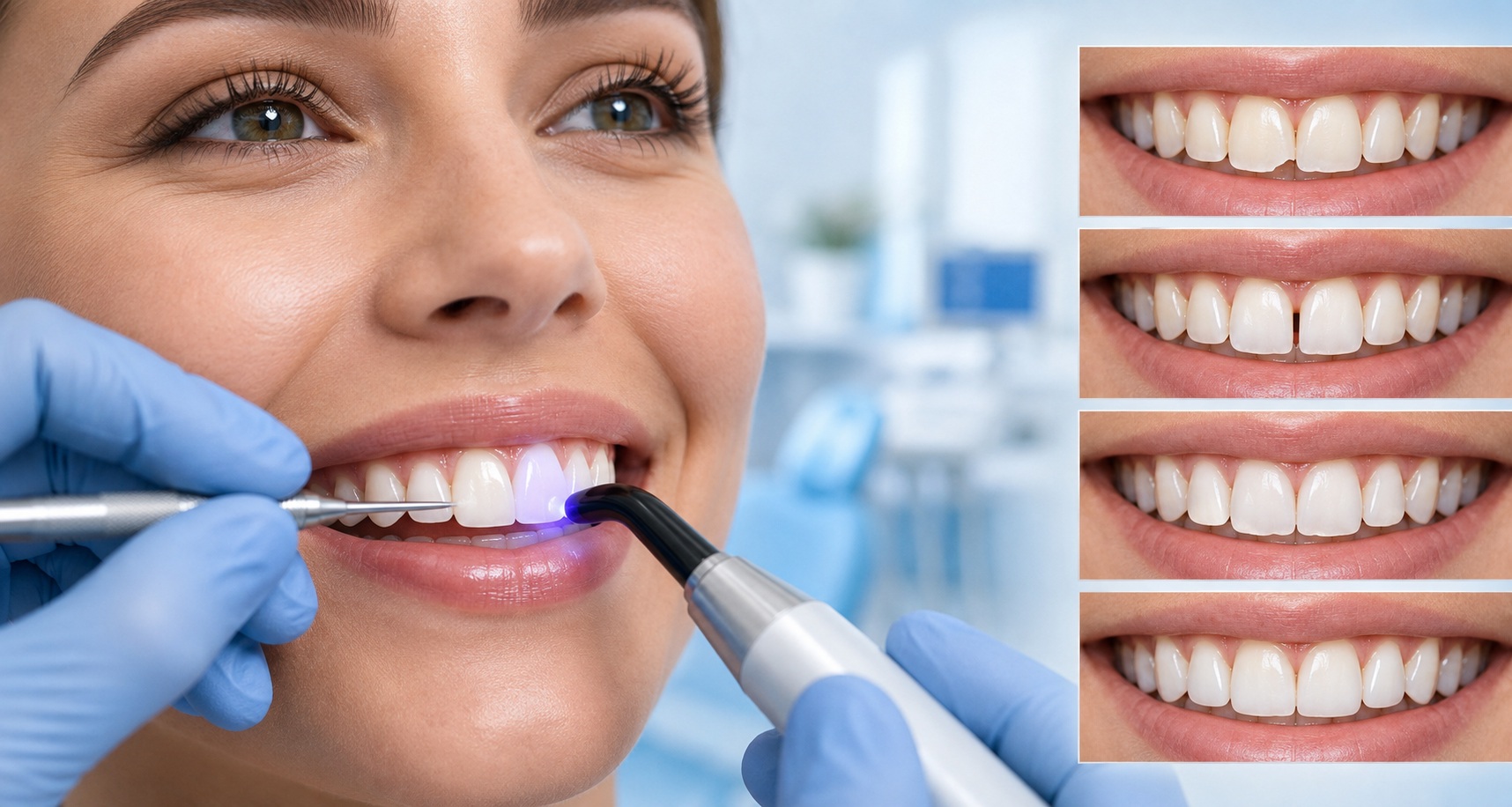
What Is Dental Bonding? Which Dental Problems Can It Treat?
What Is Dental Bonding? Which Dental Problems Can It Treat?
Small dental fractures, gaps between teeth, irregular tooth shapes, and discoloration can affect the appearance of a smile and make a person feel self-conscious. One of the methods used to correct these cosmetic concerns is dental bonding.
Dental bonding is a fast and aesthetic treatment that can often be performed without removing a significant amount of natural tooth structure. Tooth-colored composite materials are used to improve the shape, size, color, and overall appearance of the teeth.
What Is Dental Bonding?
Dental bonding is a procedure in which a tooth-colored composite resin is applied directly to the surface of a tooth, shaped carefully, and hardened using a special curing light.
Also known as “composite bonding” or “cosmetic bonding,” this procedure is especially preferred for correcting minor aesthetic problems affecting the front teeth. By adding composite material to the tooth surface, the dentist can change the tooth’s color, shape, length, or width.
Dental bonding can usually be completed in a single appointment. Unlike porcelain veneers or dental crowns, it generally does not require significant removal of the natural tooth enamel.
Which Dental Problems Can Bonding Treat?
Dental bonding can be used to correct both cosmetic concerns and certain minor structural problems. However, whether the procedure is suitable should be determined after a detailed dental examination.
1. Closing Gaps Between Teeth
Small gaps, especially between the front teeth, can be closed with composite bonding. Tooth-colored material is added to the sides of the teeth to create a more balanced and harmonious appearance.
However, if the gaps are large or caused by an orthodontic alignment problem, clear aligners or braces may be more appropriate.
2. Repairing Small Tooth Fractures
Small chips or fractures may develop due to trauma, biting hard foods, or accidental impact. Bonding can be used to rebuild the damaged area and restore a more natural tooth shape.
Dental bonding is generally suitable for minor fractures that have not reached the inner nerve tissue of the tooth. Deeper fractures may require root canal treatment, a crown, or another restorative procedure.
3. Improving the Appearance of Cracked Teeth
Small and superficial cracks on the tooth surface may be covered with composite material. This can reduce the visible appearance of the crack and improve the tooth’s aesthetics.
However, not every crack is only a cosmetic problem. The depth of the crack and whether it extends into the root or inner structures of the tooth must be evaluated by a dentist.
4. Correcting Irregular Tooth Shapes
Some teeth may naturally be smaller, shorter, pointed, or disproportionate compared with the surrounding teeth. Composite bonding can be used to reshape these teeth and create a more balanced appearance.
It is especially useful for making small teeth appear wider or longer.
5. Equalizing Tooth Length
When one of the front teeth is shorter than the others, the smile line may appear uneven. Composite material can be added to the shorter tooth to improve symmetry and create a more harmonious smile.
If the difference in tooth length is caused by teeth grinding, tooth wear, or a bite problem, these conditions should also be evaluated.
6. Covering Mild Tooth Discoloration
Localized stains, enamel defects, or discoloration that does not respond sufficiently to teeth whitening may be covered with bonding material. The composite shade is selected to match the patient’s natural teeth.
For widespread or severe discoloration, teeth whitening, composite veneers, or porcelain veneers may be considered instead.
7. Restoring Worn Tooth Edges
The edges of the front teeth may become worn because of teeth grinding, clenching, biting hard objects, or an improper bite. Dental bonding can be used to rebuild and reshape the worn areas.
For patients who grind or clench their teeth, bonding alone may not be sufficient. A night guard or bite adjustment may be recommended to protect the restoration.
8. Improving the Appearance of Mildly Crooked Teeth
Bonding may visually improve minor alignment or shape irregularities. It does not physically move the teeth. Instead, composite resin is added and shaped to create the appearance of a straighter smile.
More noticeable crowding or bite problems usually require orthodontic treatment.
9. Covering Exposed Tooth Roots
Gum recession may expose the tooth roots, causing sensitivity and cosmetic concerns. In suitable cases, composite resin can be used to cover the exposed root surface.
Before bonding is performed, the cause of gum recession should be identified. If active gum disease is present, periodontal treatment may be required first.
How Is Dental Bonding Performed?
The dental bonding procedure generally includes the following stages:
Examination and Treatment Planning
The dentist first evaluates the teeth, gums, and bite. If tooth decay, gum disease, a deep crack, or an active infection is present, these problems may need to be treated before bonding.
Shade Selection
A composite resin shade is selected to match the patient’s natural tooth color. The aim is to make the restoration blend naturally with the surrounding teeth.
Preparing the Tooth Surface
The tooth surface is prepared to help the composite material bond securely. In most cases, extensive drilling or enamel removal is not required. A bonding agent is applied to create a suitable surface for the composite resin.
Applying the Composite Material
The tooth-colored composite resin is applied in layers. The dentist carefully shapes the material according to the patient’s facial features, smile line, and surrounding tooth structure.
Light Curing
The shaped composite material is hardened and bonded to the tooth using a special curing light.
Final Shaping and Polishing
The patient’s bite is checked after the composite has hardened. Any necessary adjustments are made, and the surface is polished to create a smooth finish similar to natural tooth enamel.
The duration of the procedure depends on the number of teeth being treated and the amount of reshaping required. Bonding for a single tooth may usually be completed in approximately 30 to 60 minutes.
Is Anesthesia Required for Dental Bonding?
Local anesthesia is usually not required because dental bonding often involves little or no removal of natural tooth structure.
However, anesthesia may be necessary if tooth decay needs to be removed, an exposed and sensitive root surface is being treated, or another restorative procedure is required. This decision depends on the scope of the treatment and the patient’s sensitivity.
What Are the Advantages of Dental Bonding?
The main advantages of dental bonding include:
- It can usually be completed in a single appointment.
- It helps preserve natural tooth structure.
- It often requires little or no enamel removal.
- Tooth-colored materials can provide a natural appearance.
- It can treat small gaps, chips, shape irregularities, and discoloration.
- Patients can usually return to their daily activities immediately.
- The composite material can often be repaired or renewed.
- It may be a more conservative alternative to porcelain restorations.
Dental bonding can provide a fast and minimally invasive solution for minor and moderate cosmetic dental concerns.
Are There Any Disadvantages of Dental Bonding?
Dental bonding may not be suitable for every patient or every dental problem. Composite resin has certain limitations:
- It is not as resistant to staining as porcelain.
- It may become discolored over time due to coffee, tea, smoking, and strongly colored foods.
- It may chip or break when exposed to excessive force.
- It may require maintenance or replacement more frequently than porcelain veneers or crowns.
- It may not be suitable for large fractures or areas exposed to heavy chewing pressure.
- Teeth grinding and clenching may reduce its lifespan.
For this reason, treatment planning should consider not only aesthetic expectations but also the patient’s bite and oral habits.
How Long Does Dental Bonding Last?
The lifespan of dental bonding depends on the treated area, the amount of composite material used, oral hygiene, eating habits, and factors such as teeth grinding.
With proper care, bonding restorations may last approximately 3 to 10 years. However, the exact duration varies from person to person. Over time, the restoration may need polishing, minor repairs, or complete replacement.
What Should You Consider After Dental Bonding?
To maintain the appearance and durability of the bonding, patients should follow these recommendations:
- Brush the teeth at least twice a day.
- Clean between the teeth with dental floss or interdental brushes.
- Avoid biting pens, fingernails, ice, and hard food shells.
- Do not use the teeth to open packages or bottles.
- Limit coffee, tea, and other strongly colored drinks.
- Avoid smoking and tobacco products.
- Use a protective night guard if recommended for teeth grinding.
- Attend regular dental check-ups and professional cleaning appointments.
A dentist should be consulted if the bonded tooth develops a sharp edge, fracture, bite discomfort, or unusual sensitivity.
Can Teeth Be Whitened After Bonding?
Teeth whitening treatments can lighten natural tooth enamel, but they do not change the color of composite bonding material in the same way.
For this reason, patients who are considering both whitening and bonding are generally advised to whiten their teeth first. Once the tooth color has stabilized, the composite shade can be selected to match the new color.
If natural teeth become lighter after whitening but the existing bonding remains unchanged, the composite material may need to be polished or replaced.
Dental Bonding or Porcelain Veneers?
Dental bonding and porcelain veneers can be used for similar cosmetic concerns, but they are different procedures.
Bonding involves applying composite resin directly to the tooth surface. It generally requires less alteration of the natural tooth and can often be completed in one appointment.
Porcelain veneers are thin, custom-made shells produced in a dental laboratory. They are generally more resistant to staining and may last longer. However, some enamel removal may be required before placement.
The most suitable treatment depends on the severity of the dental problem, the patient’s expectations, bite relationship, and oral hygiene habits.
Who May Not Be Suitable for Dental Bonding?
Dental bonding may not be sufficient or appropriate in the following situations:
- Severe tooth crowding,
- Large or deep tooth fractures,
- Active gum disease,
- Untreated tooth decay,
- Severe teeth grinding or clenching,
- Insufficient enamel in certain cases,
- Bite problems that create excessive pressure on the teeth,
- Patients expecting major changes in tooth shape or color.
In these cases, orthodontic treatment, porcelain veneers, dental crowns, root canal treatment, or other restorative options may be considered.
Does Dental Bonding Look Natural?
When the correct shade selection, layering, shaping, and polishing techniques are used, bonding can blend naturally with the surrounding teeth.
A successful bonding procedure considers not only tooth color but also surface texture, light reflection, tooth edges, proportions, and harmony with the smile line. For this reason, treatment should be planned individually.
Conclusion
Dental bonding is a cosmetic dental treatment used to close small gaps between teeth, repair chipped or worn tooth edges, improve irregular tooth shapes, and cover certain types of discoloration.
Its main advantages include the ability to complete treatment in a single appointment and preserve much of the natural tooth structure. However, bonding is not suitable for every dental problem. The teeth, gums, and bite must be carefully evaluated to achieve a healthy and long-lasting result.
Whether bonding, porcelain veneers, teeth whitening, orthodontic treatment, or another procedure is most suitable can only be determined after a dental examination.
This content is intended for general informational purposes only. A dental examination is required for diagnosis and treatment planning.
Frequently Asked Questions
Is dental bonding painful?
Most dental bonding procedures are painless and can be performed without anesthesia. However, local anesthesia may be required if decay or an exposed sensitive root surface is being treated.
Can bonding be completed in one appointment?
Yes. Depending on the number of teeth and the extent of the procedure, dental bonding can usually be completed in a single visit.
Does bonding damage the teeth?
When properly planned, bonding generally requires little or no removal of natural tooth structure. However, every patient’s dental condition is different, so treatment should be planned individually.
Can broken bonding be repaired?
Yes. If a small section of the composite material chips or wears down, the damaged area can often be repaired without replacing the entire restoration.
Does dental bonding become yellow?
Composite resin may become stained over time due to coffee, tea, smoking, and colored foods. Regular oral care and professional polishing can help reduce discoloration.
Can I eat after dental bonding?
The composite resin is hardened immediately using a curing light, so patients can generally return to normal activities after the procedure. However, avoiding very hard or strongly colored foods during the first few hours may be beneficial.
How many teeth can be treated with bonding?
Bonding can be applied to a single tooth or several teeth within the smile line. The number of teeth treated depends on the patient’s aesthetic needs and dental condition.
The images used in this content do not belong to a real patient. The visuals are stock photos obtained from online content provider image platforms.
Publication Date: 13.08.2026
Editor: Uğur Aktaş
Contact Number: +90 545 450 71 41
Contact Email: info@snyclinic.com