


What Is a Night Guard? How Does It Protect Against Teeth Clenching?
What Is a Night Guard? How Does It Protect Against Teeth Clenching?
Do you wake up with a tired jaw, facial pain, or pressure in your head? If you notice wear, sensitivity, or small cracks in your teeth, you may be clenching or grinding them during sleep. This condition, medically known as “bruxism,” can occur both while awake and during sleep.
A night guard is an oral appliance used to help reduce the damage caused by nighttime teeth clenching and grinding. However, there is an important distinction: a night guard does not always stop bruxism completely. Instead, it helps protect the teeth against wear, cracking, and fractures by preventing direct contact between the upper and lower teeth.
What Is a Night Guard?
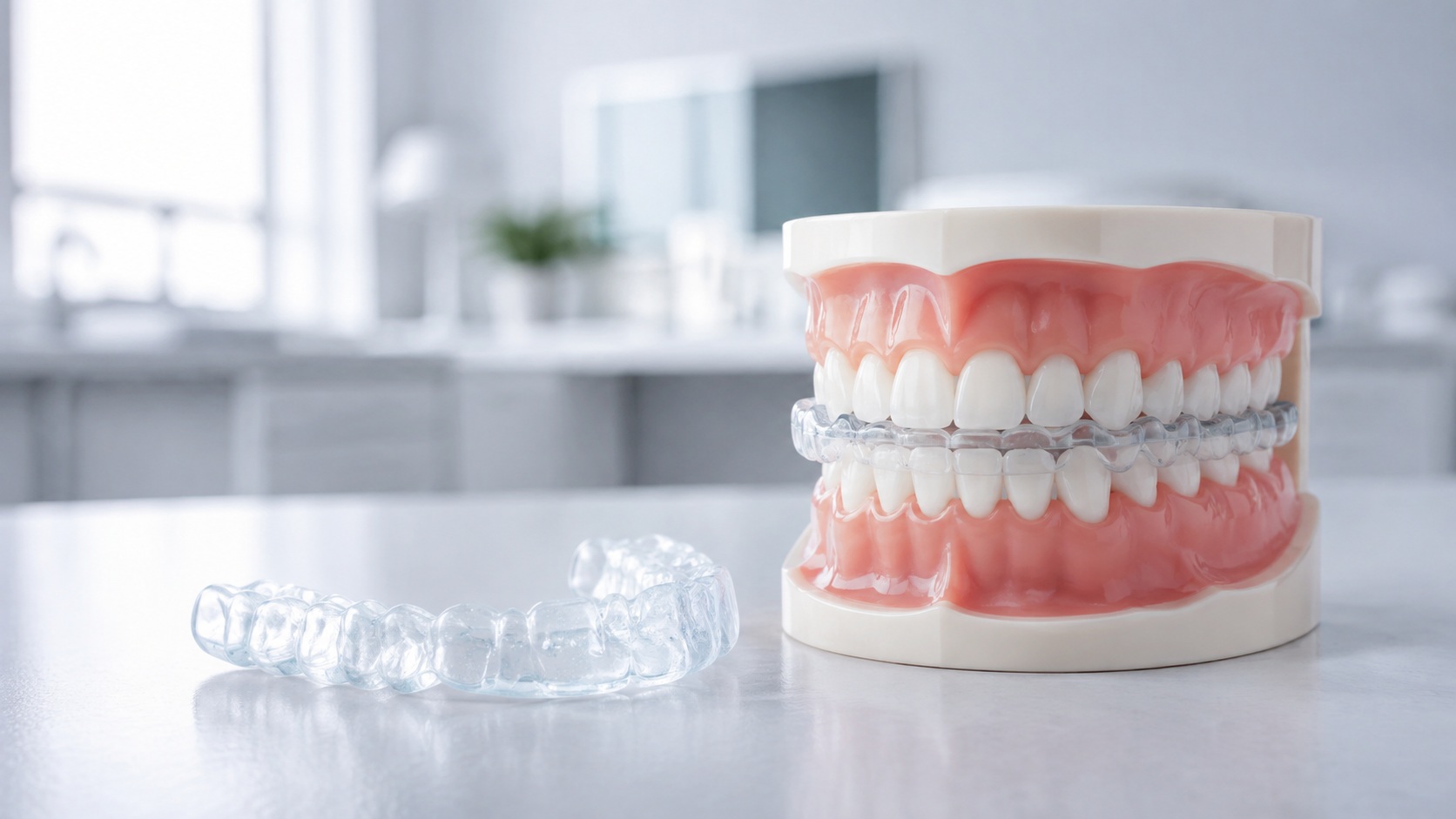
A night guard is a protective oral appliance, usually made from a clear and durable material, that fits over the teeth. It may also be called a “bruxism guard,” “occlusal splint,” “bite guard,” or “dental splint.”
Depending on the patient’s needs, the appliance may be fitted over the upper or lower teeth. Custom-made night guards are produced using dental impressions or digital scans of the mouth. This allows the appliance to fit securely, remain stable, and create balanced contact with the opposing teeth.
A night guard is not the same as an athletic mouthguard. Athletic mouthguards are designed to protect against external impacts, while night guards are intended to manage the forces caused by clenching and grinding.
What Is Bruxism?
Bruxism is the involuntary clenching, grinding, or gnashing of the teeth. When it occurs during sleep, the person is often unaware of it. It may be noticed when a sleeping partner hears grinding noises or when a dentist identifies signs of tooth wear during a routine examination.
Mild or occasional bruxism may not always require treatment. Frequent or severe bruxism, however, can cause tooth damage, jaw pain, muscle fatigue, and headaches. Recognizing the symptoms and attending regular dental check-ups are therefore important.
Possible signs of bruxism include:
- Jaw or facial pain upon waking
- Stiffness or fatigue in the jaw muscles
- Headaches around the temples
- Flattened or worn tooth surfaces
- Tooth sensitivity
- Cracked or broken teeth, fillings, or crowns
- Clicking, discomfort, or restricted movement in the jaw joint
- Grinding noises during sleep
These symptoms are not exclusive to bruxism. A dental examination is necessary for an accurate assessment.
How Does a Night Guard Protect Against Teeth Clenching?
A night guard provides protection through several basic mechanisms.
1. It Prevents Direct Contact Between the Teeth
During clenching or grinding, the upper and lower teeth come into contact under considerable force. A night guard creates a physical barrier between the dental arches, reducing direct friction between the enamel surfaces. This helps limit wear and potential tooth damage.
2. It Distributes Pressure More Evenly
A custom-made night guard is adjusted so that the teeth contact its surface in a balanced way. This helps distribute clenching forces across a wider area rather than concentrating them on only a few teeth.
3. It Helps Protect Dental Restorations
Bruxism can damage more than natural teeth. Fillings, porcelain veneers, crowns, and other dental restorations may also be affected by excessive force. A night guard can help reduce the direct mechanical load placed on these restorations.
4. It May Relieve Muscle and Jaw Joint Symptoms
A properly designed appliance may help the jaw muscles function in a more comfortable position for some patients. However, a night guard cannot be expected to eliminate jaw joint pain in every case. Scientific evidence regarding the effectiveness of oral appliances for pain associated with temporomandibular disorders remains limited.
Does a Night Guard Stop Teeth Grinding Completely?
No. A night guard is primarily a protective device. It does not necessarily eliminate clenching or grinding during sleep. Its main purpose is to reduce the risk of damage to the teeth and existing dental restorations while the behavior continues.
Bruxism may be associated with stress, anxiety, sleep patterns, certain medications, smoking, and alcohol consumption. For this reason, treatment may require evaluating the underlying contributing factors as well as using a night guard.
People who experience loud snoring, pauses in breathing during sleep, waking up choking, or excessive daytime sleepiness should also be assessed for sleep apnea. A standard night guard is not the same as a mandibular advancement device used to treat sleep apnea.
Why Is a Custom-Made Night Guard Important?
Over-the-counter products may be affordable and easily accessible, but every person has a different dental structure and bite. An appliance that does not fit properly—or covers only part of the dental arch—may cause discomfort, gum irritation, or changes in the bite.
With a dentist-made night guard:
- The teeth and gums are examined.
- Dental impressions or digital scans are taken.
- The appliance is produced according to the patient’s dental anatomy.
- Tooth contacts are checked, and necessary adjustments are made.
- The appliance and the patient’s bite are monitored over time.
Poorly fitting splints may cause problems with the teeth or gums.
How Should a Night Guard Be Used and Cleaned?
The frequency and duration of use should be determined according to the dentist’s recommendations. Most night guards are worn during sleep. During the first few days, patients may experience increased saliva, mild difficulty speaking, or the sensation of having a foreign object in the mouth. These effects usually improve during the adjustment period.
To maintain hygiene and extend the appliance’s lifespan:
- Brush your teeth before inserting the night guard.
- Rinse the appliance with cool or lukewarm water after use.
- Clean it gently with a soft toothbrush and a suitable cleaning product.
- Do not use hot or boiling water, as heat may distort its shape.
- Store it in a ventilated protective case.
- Keep it away from pets and direct sunlight.
- Take it to dental appointments at the intervals recommended by your dentist.
If the night guard no longer fits, do not force it into place. Consult your dentist if it causes gum sores, significant pain, changes in your bite, or develops cracks.
Does a Night Guard Need to Be Replaced?
The lifespan of a night guard depends on its material, the severity of bruxism, cleaning habits, and changes in the mouth. Over time, the appliance may become worn, perforated, loose, or unable to fit correctly.
The night guard may need to be checked or replaced if:
- It develops cracks, holes, or significant wear.
- It becomes loose in the mouth.
- It no longer fits after dental treatment.
- It causes pain or gum irritation.
- Your bite feels noticeably different in the morning.
When Should You See a Dentist?
You should consult a dentist if you experience tooth wear or sensitivity, pain around the jaw, face, or ears, or signs of nighttime teeth grinding.
During the examination, the dentist may assess tooth wear, fillings and crowns, jaw muscles, jaw joints, and the relationship between the upper and lower teeth. This helps determine whether a night guard is appropriate and which type of appliance is best suited to the patient.
A night guard is a protective oral appliance that helps reduce the risk of tooth wear, cracking, and fractures by preventing direct contact between the teeth during sleep. However, it may not completely stop bruxism or treat its underlying cause on its own.
For safe and effective use, the appliance should ideally be custom-made following a dental examination, cleaned regularly, and checked at recommended intervals. If you frequently wake up with jaw pain, headaches, or tooth sensitivity, consider consulting your dentist before the problem progresses.
The images used in this content do not belong to a real patient. The visuals are stock photos obtained from online content provider image platforms.
Publication Date: 20.08.2026
Editor: Uğur Aktaş
Contact Number: +90 545 450 71 41
Contact Email: info@snyclinic.com