


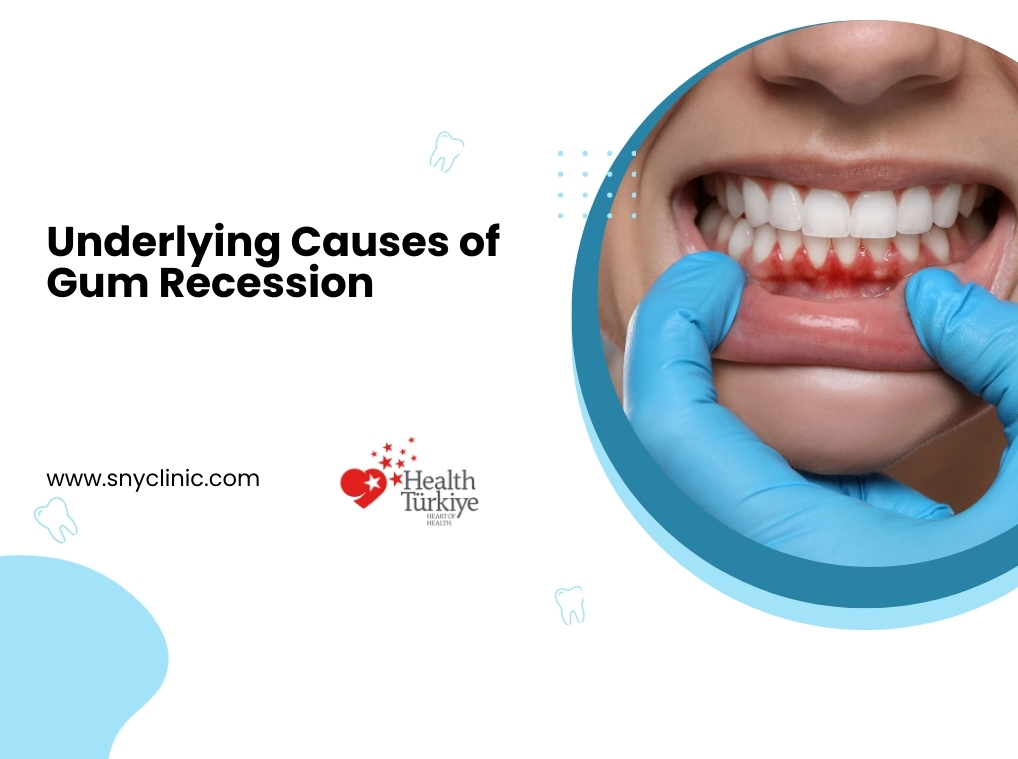
Underlying Causes of Gum Recession
Underlying Causes of Gum Recession
Gum recession is a common oral health problem that often progresses unnoticed but can lead to serious dental issues if left untreated. It occurs when the gum tissue pulls back from the tooth surface, exposing the tooth roots. This condition can cause both aesthetic concerns and functional problems. Gum recession is not merely a local issue; in many cases, it is a sign of underlying oral or systemic health problems.
In this article, we examine the main causes behind gum recession, associated risk factors, and the potential consequences of neglecting treatment.
What Is Gum Recession?
Gum recession is the condition in which the gum tissue recedes from its normal position around the tooth, exposing the tooth root. Under healthy conditions, tooth roots are protected by gum tissue and bone. When this protective structure weakens, the teeth become more sensitive and more vulnerable to decay and infection.
Gum recession usually develops gradually and may go unnoticed in its early stages. As a result, many patients seek professional care only after the condition has significantly progressed.
Improper Oral Hygiene Habits
One of the most common causes of gum recession is incorrect oral hygiene practices.
Aggressive Tooth Brushing
Brushing the teeth too hard can cause continuous trauma to the gum tissue. Over time, this leads to abrasion and recession of the gums. The long-term use of hard-bristled toothbrushes significantly increases this risk.
Incorrect Brushing Technique
Brushing horizontally with excessive pressure damages the gum line. When proper brushing techniques are not used, the gums become increasingly sensitive and begin to recede.
Plaque and Tartar Accumulation
Inadequate oral hygiene allows plaque to accumulate on tooth surfaces. Over time, plaque hardens and turns into tartar. Tartar buildup between the tooth and gum causes inflammation of the gum tissue.
If tartar is not professionally removed, it can lead to progressive gum disease and eventual gum recession.
Gum Diseases (Periodontal Diseases)
One of the most serious causes of gum recession is periodontal disease.
Gingivitis
Gingivitis is the early stage of gum inflammation. It is characterized by redness, swelling, and bleeding of the gums. If left untreated, it can progress into more severe conditions.
Periodontitis
Periodontitis is the advanced form of gingivitis and affects both the gum tissue and the underlying bone. Once bone loss begins, gum recession becomes inevitable and may eventually lead to tooth loss.
Teeth Grinding and Clenching (Bruxism)
Teeth grinding and clenching place excessive pressure on the teeth. This pressure affects not only the teeth but also the supporting gum and bone structures. Over time, the gums cannot withstand this force and begin to recede.
Stress, anxiety disorders, and sleep disturbances are common factors that contribute to bruxism.
Orthodontic Problems and Improper Treatments
Crooked teeth or improper bite alignment (malocclusion) can cause uneven pressure on certain teeth. This excessive force can strain the gum tissue and result in gum recession.
Additionally, poorly planned orthodontic treatments or excessive force applied during dental procedures may contribute to gum recession.
Genetic Predisposition
Some individuals naturally have thin and delicate gum tissue due to genetic factors. Even with good oral hygiene, these individuals may be more prone to gum recession. A family history of gum problems significantly increases the risk.
Smoking and Tobacco Use
Smoking is one of the most damaging factors for gum health. It reduces blood circulation in the gums, impairing the tissue’s ability to heal and regenerate. Gum disease in smokers often progresses silently and is detected at later stages.
As a result, gum recession tends to advance faster and more aggressively in individuals who use tobacco products.
Systemic Diseases and Hormonal Changes
Certain systemic conditions increase the risk of gum recession, including:
- Diabetes
- Osteoporosis
- Immune system disorders
Hormonal changes during pregnancy, puberty, and menopause also make gum tissue more sensitive and susceptible to recession.
What Happens If Gum Recession Is Left Untreated?
Untreated gum recession can lead to several complications over time, including:
- Tooth sensitivity and pain
- Root surface cavities
- Aesthetic concerns
- Persistent bad breath
- Tooth mobility and tooth loss
Early diagnosis and regular dental check-ups are crucial to prevent these outcomes.
Can Gum Recession Be Prevented?
While gum recession cannot always be fully prevented, its progression can be slowed or minimized by taking the following measures:
- Using a soft-bristled toothbrush
- Learning and applying proper brushing techniques
- Scheduling regular professional dental cleanings
- Wearing a night guard if teeth grinding is present
- Quitting smoking
- Attending routine dental check-ups
Although gum recession is often perceived as a cosmetic issue, it may indicate serious underlying oral and systemic health problems. Early detection and accurate identification of the causes are essential for maintaining long-term dental health.
The most effective way to protect oral health is through informed daily care and regular professional examinations. If signs of gum recession are noticed, consulting a dental professional promptly can help prevent more severe complications.
The images used in this content do not belong to a real patient. The visuals are stock photos obtained from online content provider image platforms.
Publication Date: 27.1.2026
Editor: Uğur Aktaş
Contact Number: +90 545 450 71 41
Contact Email: info@snyclinic.com