


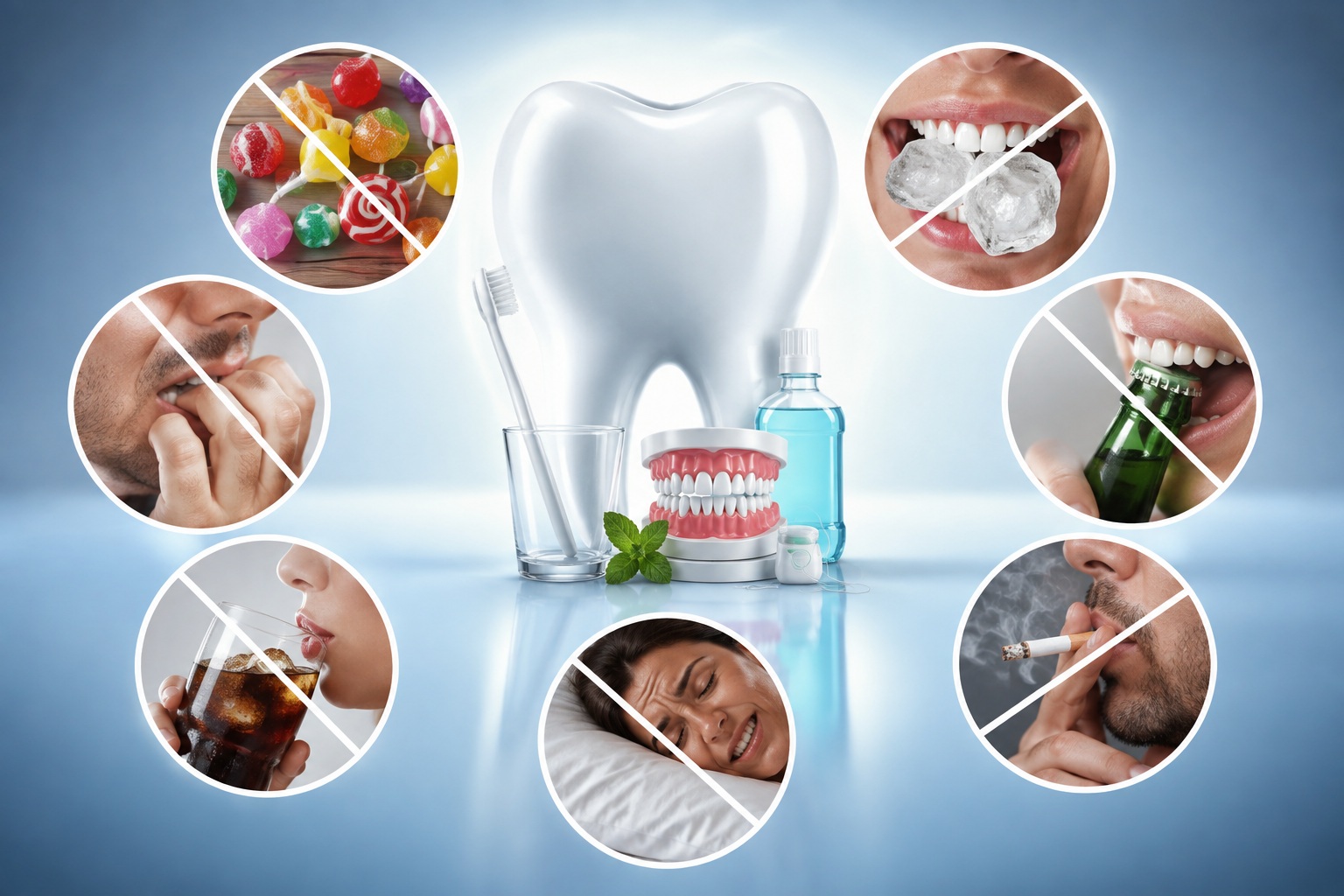
7 Harmful Habits You Should Quit for a Healthy Smile
7 Harmful Habits You Should Quit for a Healthy Smile
A healthy and attractive smile cannot be achieved simply by brushing your teeth regularly. Some everyday habits that we repeat without even realizing it can gradually damage our teeth and gums. For a healthy smile, avoiding habits that harm your teeth is just as important as maintaining a proper oral hygiene routine.
Brushing your teeth too aggressively, biting your nails, chewing ice, using your teeth as tools, or constantly consuming sugary drinks throughout the day may seem harmless at first. However, when these habits continue over time, they may contribute to enamel wear, tooth sensitivity, cracks, fractures, cavities, and gum problems.
So, which habits should you quit to maintain healthy teeth and a beautiful smile? Here are seven harmful habits you should avoid to protect your oral and dental health.
1. Brushing Your Teeth Too Hard
Many people believe that brushing their teeth harder will make them cleaner. However, aggressive brushing can actually damage the teeth and gums over time rather than improving oral health.
Applying excessive pressure while brushing may cause wear, particularly around the gumline. Over time, this can contribute to gum recession and expose areas of the tooth root that would normally be protected by the gums.
When root surfaces become exposed, you may experience tooth sensitivity when consuming hot, cold, sweet, or acidic foods and beverages.
Aggressive brushing may also contribute to gradual enamel wear. Although tooth enamel is one of the hardest substances in the human body, repeated mechanical stress can still affect its surface.
Instead of applying excessive force, focus on using the correct brushing technique. A soft-bristled toothbrush and gentle, controlled movements are generally preferable.
Electric toothbrushes equipped with pressure sensors may also be helpful for people who tend to apply too much pressure while brushing.
Remember, effective oral hygiene is not about brushing harder. It is about brushing correctly and consistently.
2. Biting Your Nails
Nail biting is often associated with stress, anxiety, concentration, or simply long-standing habit. However, it can affect more than just the appearance of your nails—it may also damage your teeth.
Repeatedly placing your nails between your front teeth creates ongoing pressure on the teeth. Over time, this habit may contribute to small areas of wear or tiny cracks along the edges of the front teeth.
Existing minor cracks may also become larger if the habit continues.
Nail biting can additionally place unnecessary strain on the jaw joint and chewing muscles. Holding the jaw in an unnatural position repeatedly may cause discomfort, particularly in people who bite their nails frequently.
There is also a hygiene concern. Our hands and nails come into contact with many different surfaces throughout the day. Putting your nails into your mouth may transfer microorganisms from your hands to the oral cavity.
If you regularly bite your nails, try identifying the situations that trigger the behavior. If it becomes more frequent during stressful situations or periods of intense concentration, developing alternative habits may help you reduce it.
3. Chewing Ice and Very Hard Foods
Chewing the ice left in your glass after finishing a drink may seem harmless. However, ice is extremely hard and can place significant pressure on your teeth.
Although teeth are designed to cut and chew food, they are not completely resistant to extremely hard objects.
When you chew ice, your teeth may be exposed to sudden and intense pressure. Particular care may be necessary if you have fillings, crowns, root canal-treated teeth, or other dental restorations.
Frequently chewing hard foods or objects may contribute to microscopic cracks in the tooth enamel. These cracks may initially cause no noticeable symptoms but can potentially become larger over time, resulting in sensitivity, discomfort, or tooth fractures.
Chewing very hard candies, cracking shells with your teeth, and similar behaviors may also increase the risk of dental damage.
The front teeth, in particular, should not be used to break extremely hard foods or objects.
When a tooth suddenly fractures, the problem is not only cosmetic. Depending on the depth and location of the fracture, more extensive dental treatment may be necessary.
For a healthy smile, protecting your teeth from unnecessary and excessive pressure is important.
4. Using Your Teeth as Tools
Opening packages, tearing plastic labels, cutting thread, or trying to loosen a bottle cap...
When the proper tool is not immediately available, using your teeth may seem like a convenient solution. However, using your teeth as tools can be highly risky for your oral and dental health.
Teeth are designed primarily to bite and chew food. The forces created when opening packages or tearing hard materials can be very different from those generated during normal chewing.
Sudden pressure on the front teeth can cause a small piece of enamel to chip away. Stronger forces may result in a more significant fracture.
People with dental bonding, veneers, crowns, or other aesthetic dental restorations should be particularly careful because these behaviors may also damage restorations.
Regularly biting pens, pencils, or similar objects can create similar problems. Repetitive pressure may gradually cause visible wear on tooth surfaces.
A simple rule can help: if you would normally need a tool to open, cut, or tear something, do not use your teeth instead.
Saving a few seconds is not worth risking a tooth fracture that could require dental treatment.
5. Consuming Sugary and Acidic Drinks Throughout the Day
The effects of sugary and acidic beverages on oral health are not determined only by how much you consume. How frequently you consume them can also be important.
For example, drinking a sugary beverage within a relatively short period and sipping the same beverage repeatedly over several hours may expose your teeth to different levels and durations of risk.
After consuming foods or beverages containing sugar, bacteria in the mouth can use those sugars and produce acids. This acidic environment can negatively affect the mineral structure of tooth enamel.
When this process occurs frequently, the risk of tooth decay may increase.
Carbonated drinks, energy drinks, and some fruit-based beverages may also affect tooth enamel because of their acidity. Frequent and prolonged exposure can contribute to dental erosion.
As enamel becomes thinner, the naturally more yellow dentin underneath may become more visible. As a result, teeth may appear more yellow and sensitivity may increase.
For a healthy smile, water should generally be the main beverage consumed throughout the day. If you consume sugary or acidic drinks, limiting their frequency can help reduce repeated exposure.
After drinking something acidic, you can rinse your mouth with water. Rather than brushing aggressively immediately afterward, it may be preferable to wait for a while before brushing.
6. Ignoring Teeth Grinding and Clenching
Teeth grinding and clenching, also known as bruxism, can occur unconsciously, particularly during sleep.
If you wake up with tired or tense jaw muscles, experience unexplained tooth sensitivity, or someone tells you that you grind your teeth while sleeping, it may be worth having the situation evaluated.
Keeping the teeth under excessive pressure for extended periods can gradually wear down their surfaces.
Under normal circumstances, your upper and lower teeth are not meant to remain tightly pressed together throughout the entire day. With bruxism, however, the teeth may be subjected to significant force for prolonged periods.
Over time, the biting surfaces of the teeth may become flatter. Some people may also develop enamel cracks, chipped teeth, or fractures.
Teeth grinding and clenching can also be associated with jaw muscle pain, facial discomfort, headaches, or temporomandibular joint symptoms.
Because the causes and severity of bruxism can vary considerably between individuals, treatment should be determined after an appropriate dental evaluation.
In certain cases, custom-made night guards may be recommended to reduce direct contact between the teeth. However, not every case of teeth grinding is the same, so an individualized approach is important.
If you notice signs of bruxism, seeking professional advice rather than ignoring the problem may help prevent progressive tooth wear.
7. Constantly Postponing Dental Check-Ups
One of the most harmful habits for maintaining a healthy smile is assuming that you only need to visit the dentist when something hurts.
Many oral and dental problems may not cause noticeable pain during their early stages.
For example, a small cavity may develop without causing significant symptoms. As decay progresses deeper into the tooth, sensitivity to hot or cold foods and eventually pain may occur.
Similarly, gum disease may initially present with relatively mild symptoms.
Bleeding while brushing, redness, swelling, or changes in the gums should not automatically be considered normal.
Regular dental examinations can allow changes in your oral health to be identified at an earlier stage. When dental problems are diagnosed early, more conservative treatment options may sometimes be available.
The ideal frequency of dental check-ups is not necessarily the same for everyone.
Your risk of tooth decay, gum health, existing restorations, implants, orthodontic treatment, oral hygiene habits, and individual dental history can all influence how frequently examinations may be recommended.
For this reason, the most appropriate check-up schedule should be determined together with your dentist.
What Should a Daily Oral Care Routine Look Like for a Healthy Smile?
Quitting harmful habits is an important part of protecting your oral health. However, it should be combined with a consistent and appropriate oral hygiene routine.
Brushing your teeth regularly with the correct technique, cleaning between the teeth, and paying attention to tongue hygiene are fundamental components of daily oral care.
Plaque and food particles can accumulate in areas between the teeth that a toothbrush cannot effectively reach. Depending on your individual needs, dental floss or interdental brushes may therefore be useful.
Your eating and drinking habits can also directly influence oral health.
Rather than continuously snacking throughout the day, developing more structured eating habits, reducing the frequency of sugary foods and drinks, and drinking adequate water may help protect your teeth.
Avoiding smoking and other tobacco products is also important for oral health. Tobacco use can contribute not only to tooth discoloration but also to problems affecting the gums and other tissues in the mouth.
Can Harmful Habits Affect the Appearance of Your Smile?
Yes. Certain habits that damage oral health can gradually affect the appearance of your smile as well.
For example, wear caused by teeth grinding may make the front teeth appear shorter or create uneven tooth edges.
Frequent consumption of acidic beverages can contribute to enamel erosion, potentially changing both the color and surface appearance of the teeth.
Nail biting and using teeth to open packages may result in small chips or fractures, particularly in the front teeth.
Therefore, achieving an attractive smile is not simply about cosmetic treatments such as teeth whitening or smile design.
Protecting oral health and controlling harmful habits should come first.
Healthy teeth and gums provide the foundation for both a natural-looking smile and successful long-term aesthetic dental treatments.
When Should You Stop Habits That Damage Your Teeth?
If you have a habit that may be damaging your teeth, it is generally beneficial to stop as early as possible.
Tooth enamel does not regenerate in the same way that skin does. Therefore, preventing existing wear or damage from progressing is particularly important.
For example, you may have brushed your teeth too aggressively for years. Switching to a gentler and more appropriate technique today may not reverse existing wear, but it can help prevent additional damage.
Similarly, quitting habits such as chewing ice or biting your nails can reduce the repetitive mechanical stress placed on your teeth.
The key is to recognize the harmful behavior and make sustainable changes.
Small Changes Can Make a Big Difference to Your Smile
Protecting your oral and dental health does not necessarily require completely changing your lifestyle. Small adjustments to everyday behavior can make a meaningful difference over the long term.
Brushing more gently, avoiding chewing ice, never opening packages with your teeth, reducing frequent consumption of sugary beverages, and attending regular dental check-ups are just a few examples.
It is also important to remember that teeth are not simply an aesthetic feature.
Healthy teeth play an essential role in comfortable chewing, speech, and overall quality of life.
Maintaining good oral health is also important for the long-term success of aesthetic dental treatments. Healthy teeth and gums form the foundation of an attractive smile.
Protecting Your Smile Starts with Your Daily Habits
Maintaining a healthy and attractive smile involves more than brushing your teeth regularly. You should also pay attention to everyday behaviors that may be damaging your teeth without you realizing it.
Brushing too aggressively, biting your nails, chewing ice and hard objects, using your teeth to open packages, frequently consuming sugary and acidic drinks, ignoring teeth grinding, and repeatedly postponing dental check-ups are among the habits that may negatively affect oral and dental health over time.
Avoiding these habits can help protect tooth enamel, gum health, and existing dental restorations.
If you notice bleeding gums, sensitivity, pain, cracks, fractures, or unusual tooth wear, consulting a dentist for a professional evaluation is important.
Remember, a beautiful smile is about more than having white teeth. Healthy teeth, healthy gums, and good daily habits are the foundation of a natural smile that can be maintained for years to come.
The images used in this content do not belong to a real patient. The visuals are stock photos obtained from online content provider image platforms.
Publication Date: 03.09.2026
Editor: Uğur Aktaş
Contact Number: +90 545 450 71 41