


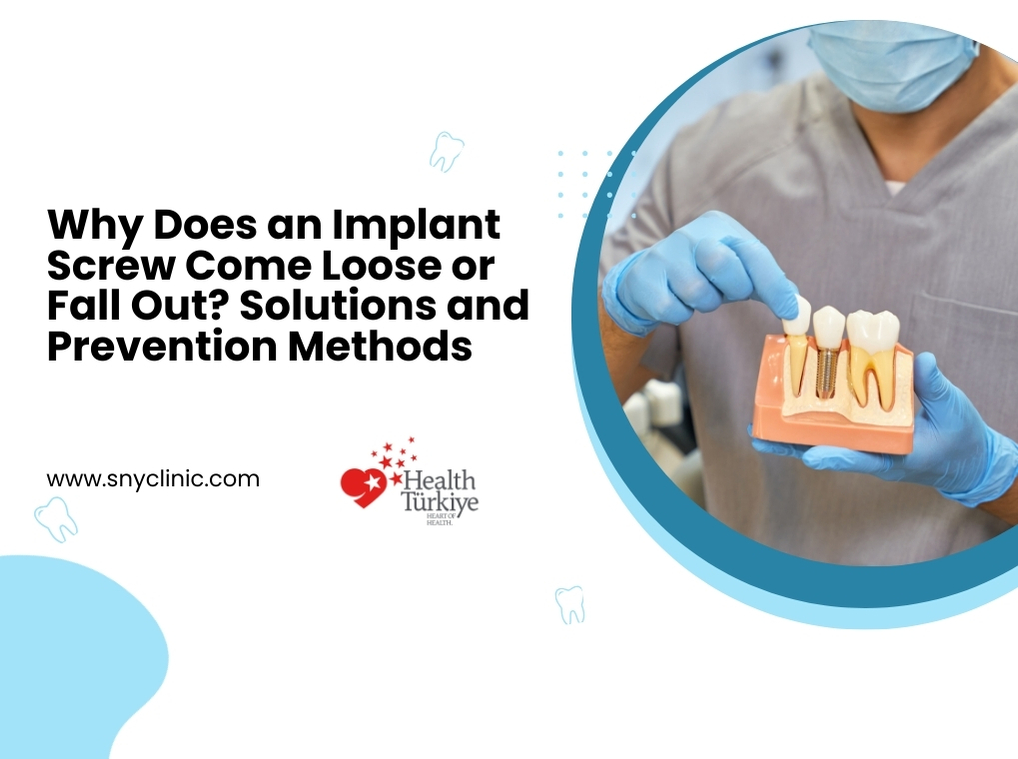
Why Does an Implant Screw Come Loose or Fall Out? Solutions and Prevention Methods
Why Does an Implant Screw Come Loose or Fall Out? Solutions and Prevention Methods
Dental implants are among the most successful and long-lasting solutions for replacing missing teeth, both functionally and aesthetically. With proper planning and correct application, implants can be used comfortably for many years. However, in some cases, problems such as implant screw loosening or falling out may occur. While this situation can be worrying for patients, it is usually easy to resolve with early intervention.
In this article, we explain in detail why implant screws fall out, which factors increase the risk, how the problem is treated, and what can be done to prevent it from happening again.
What Is an Implant Screw and What Is Its Function?
An implant screw is a critical component that connects the implant body placed in the jawbone to the prosthetic tooth (crown). It ensures that chewing forces are evenly transmitted to the bone. The more accurately the screw is placed and tightened, the longer the implant system will function without problems.
Why Does an Implant Screw Fall Out? (Detailed Causes)
1. Incorrect or Insufficient Torque Application
Implant screws must be tightened according to the specific torque values recommended by the manufacturer.
- If the screw is under-tightened, it may loosen over time
- If over-tightened, metal fatigue may occur
Both situations increase the risk of screw loosening or failure.
2. Teeth Grinding and Clenching (Bruxism)
Patients with bruxism apply excessive force to their implants. Especially during sleep, uncontrolled pressure can lead to:
- Screw loosening
- Damage to the prosthetic crown
- Long-term implant failure
3. Prosthetic Misfit
If the crown or prosthetic structure does not fit perfectly on the implant, constant micro-movements occur. Over time, these movements can cause:
- Screw loosening
- Damage to the screw connection
- Detachment of the prosthetic tooth
4. Insufficient Jawbone Support
If the bone surrounding the implant is not strong enough, implant stability decreases. This indirectly leads to screw-related problems. Bone loss may result from:
- Long-term tooth loss
- Bone diseases
- Poor oral hygiene
5. Low-Quality Implant or Screw Materials
Using low-quality implant systems or non-original screws significantly increases the risk of loosening and failure over time. Incompatible components can compromise the integrity of the entire implant system.
6. Improper Chewing Habits
Chewing very hard foods on one side or using implant-supported teeth to crack hard objects places excessive stress on the implant screw.
What Should You Do If an Implant Screw Falls Out?
There is no need to panic if an implant screw falls out. However, the following points are important:
- Keep the screw or crown in a safe place
- Do not attempt to fix it with glue
- Avoid chewing on the affected area
- See your dentist as soon as possible
With early treatment, the problem can usually be resolved without damaging the implant.
Treatment Options for a Fallen Implant Screw
- Retightening the screw using the correct torque
- Replacing a damaged screw with a new one
- Correcting prosthetic fit issues
- Using a night guard for patients with bruxism
- Re-evaluating the bone structure around the implant if necessary
How to Prevent an Implant Screw from Falling Out
✔ Regular Dental Check-Ups
After implant treatment, dental check-ups should be performed at least once or twice a year.
✔ Use of a Night Guard
Night guards significantly extend the lifespan of implants in patients who grind or clench their teeth.
✔ Avoid Hard Foods
Ice, hard nuts, and hard candies can damage implant components.
✔ Maintain Good Oral Hygiene
Infections around implants can lead to bone loss and screw-related complications.
✔ Choose High-Quality Implant Systems
Reliable and well-established implant brands are essential for long-term success.
Is a Loose or Fallen Implant Screw Dangerous?
In most cases, a fallen implant screw is a manageable and reversible issue. However, if left untreated, it may lead to:
- Increased risk of infection
- Bone loss
- Complete implant failure
Although implant screw loosening or falling out can be frustrating, it is usually easy to treat with timely intervention. Proper planning, high-quality materials, regular follow-ups, and patient cooperation are the key factors for long-term implant success.
Remember: With proper care and professional monitoring, dental implants can be used safely and comfortably for many years.
The images used in this content do not belong to a real patient. The visuals are stock photos obtained from online content provider image platforms.
Publication Date: 25.12.2025
Editor: Uğur Aktaş
Contact Number: +90 545 450 71 41
Contact Email: info@snyclinic.co