


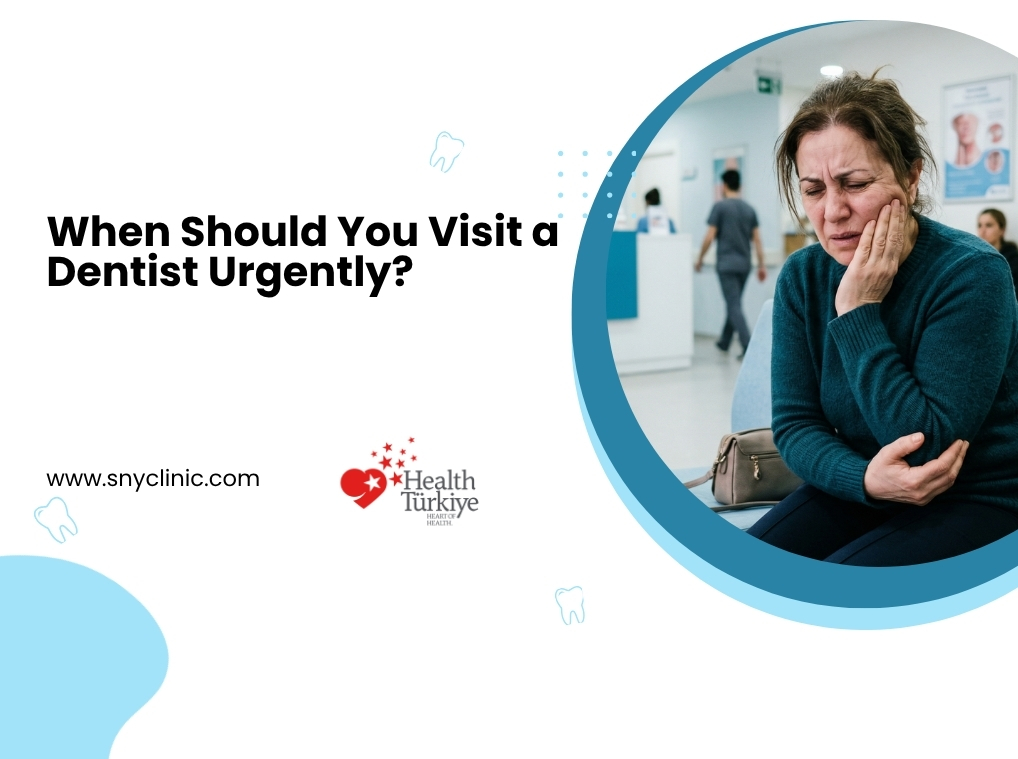
When Should You Visit a Dentist Urgently?
When Should You Visit a Dentist Urgently?
Oral and dental health is an essential part of overall well-being. Many people tend to postpone dental problems or try to manage them with painkillers. However, there are situations where you should seek immediate dental care. Otherwise, a minor issue can quickly turn into a serious health problem. In this article, we will discuss in detail the situations in which you should urgently visit a dentist.
Severe Toothache
Sudden and increasingly intense tooth pain is one of the most common dental emergencies. Pain that wakes you up at night, throbs continuously, and does not subside often indicates advanced tooth decay that has reached the nerve.
Severe toothache may be a sign of:
- Advanced tooth decay
- Dental abscess
- Pulp inflammation (pulpitis)
Temporary solutions are not enough in such cases—professional treatment is necessary.
Dental Abscess and Facial Swelling
A dental abscess is a pus-filled infection that forms at the root of a tooth or in the surrounding gum tissue. Common symptoms include severe pain, facial swelling, tenderness, and sometimes fever. If noticeable swelling appears on your face, it requires urgent attention.
If left untreated, a dental abscess can:
- Spread to the jawbone
- Extend to the neck and head
- Lead to life-threatening infections
For this reason, immediate dental care is crucial.
Broken or Cracked Tooth
Teeth can break or crack due to trauma, falls, or biting hard objects. This is not just a cosmetic issue; the inner structure of the tooth may also be damaged.
Situations requiring urgent care include:
- A large portion of the tooth breaking off
- Increased sensitivity or pain
- Exposure of the nerve
If possible, keep the broken piece in milk and visit a dentist as soon as possible.
Knocked-Out Tooth (Avulsion)
A completely dislodged tooth due to trauma is one of the most urgent dental emergencies. Time is critical in these cases. Interventions within the first 30–60 minutes significantly increase the chances of saving the tooth.
What should you do?
- Hold the tooth by the crown, not the root
- Rinse gently with clean water
- Try to place it back in its socket if possible, or store it in milk
- Seek immediate dental care
Quick action can make the difference between saving and losing the tooth.
Severe Gum Bleeding
Mild gum bleeding during brushing can be normal in some cases. However, heavy and uncontrollable bleeding is a sign of a serious problem.
Urgent situations include:
- Bleeding after trauma
- Advanced gum disease
- Uncontrolled bleeding after dental procedures
In such cases, you should not delay seeking professional help.
Jaw Locking and Severe Pain
Difficulty opening your mouth, jaw locking, or severe pain in the jaw joint may indicate temporomandibular joint (TMJ) disorders.
Emergency warning signs include:
- Inability to open the mouth
- Severe restriction in jaw movement
- Sudden intense pain
These conditions can significantly affect daily life and require prompt treatment.
Impacted Teeth Problems (Especially Wisdom Teeth)
Impacted teeth, particularly wisdom teeth, can sometimes cause severe pain and infections. If you experience the following symptoms, urgent evaluation is needed:
- Swelling and redness in the gums
- Difficulty opening the mouth
- Pain while swallowing
- Bad breath
These are often signs of infection and should not be ignored.
Problems with Fillings or Dental Prosthetics
Broken fillings, loose crowns, or damaged prosthetics may also require urgent care in certain situations, especially when:
- Sharp edges are causing injury to the tongue or cheek
- Pain is present
- Eating becomes difficult
You should consult a dentist as soon as possible.
Orthodontic Emergencies
People wearing braces may also face dental emergencies such as:
- Broken wires
- Loose brackets
- Wires poking into the cheek
These issues can cause pain and injury and should be addressed promptly.
When Should You Not Wait?
You should not delay visiting a dentist if you experience any of the following:
- Persistent and severe pain
- Swelling in the face or jaw
- Toothache accompanied by fever
- Tooth loss due to trauma
- Severe difficulty opening the mouth
These symptoms often indicate serious underlying conditions.
Dental problems may start mildly but can progress rapidly. Conditions such as pain, swelling, bleeding, and trauma often require urgent attention. Early diagnosis and proper treatment can prevent tooth loss and more serious health complications.
Remember, tooth pain is an important signal from your body. Instead of ignoring it, seeking timely dental care is the best step toward maintaining a healthy life.
The images used in this content do not belong to a real patient. The visuals are stock photos obtained from online content provider image platforms.
Publication Date: 07.04.2026
Editor: Uğur Aktaş
Contact Number: +90 545 450 71 41
Contact Email: info@snyclinic.co