


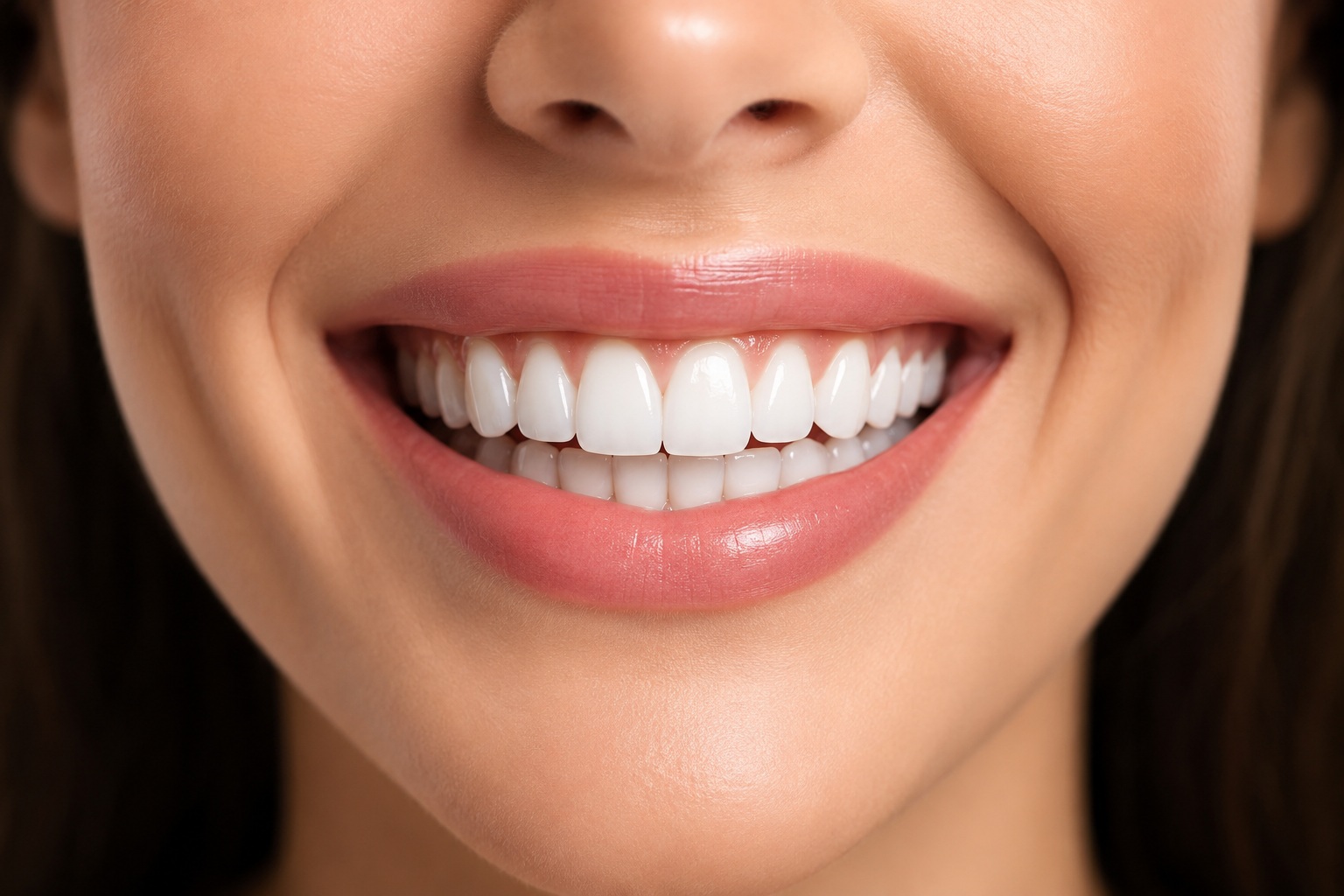
What Is Lip and Tooth Harmony? Key Considerations in Aesthetic Smile Design
What Is Lip and Tooth Harmony? Key Considerations in Aesthetic Smile Design
What Is Lip and Tooth Harmony?
Smiling is one of the first facial expressions people notice. However, an aesthetic smile is not only about white and well-aligned teeth. The shape of the lips, the size of the teeth, the appearance of the gums, and facial features must all be evaluated as a whole. This overall balance is called lip and tooth harmony.
In aesthetic dentistry, the goal is to create a natural, balanced smile that suits the individual’s face. Since each person has a unique lip structure, facial proportions, and smile pattern, a successful smile design must be completely personalized.
Why Is Lip and Tooth Harmony Important?
No matter how aesthetically pleasing the teeth are on their own, if they are not in harmony with the lips, the desired natural appearance cannot be achieved. The lips are one of the most important structures that determine how much of the teeth are visible when smiling.
With properly planned lip-tooth harmony:
- A more natural smile is achieved.
- Facial aesthetics are balanced.
- The person appears younger and more dynamic.
- The appearance of teeth during speech becomes more aesthetic.
- Self-confidence increases.
The Role of Lips in Aesthetic Smile Design
The lips form the frame of the smile. Therefore, lip structure is analyzed in detail during aesthetic smile planning.
The main criteria evaluated include:
Lip Thickness
In thin lips, the visibility of teeth may be more limited. In fuller lips, the amount of tooth display is planned differently. In both cases, tooth length should be determined according to the lip structure.
Lip Symmetry
Equal movement of the right and left sides of the lips is important for aesthetics. Any asymmetry during smiling is taken into account in treatment planning.
Smile Line
A natural appearance is achieved when the curve formed by the upper lip during smiling follows the curve of the incisal edges of the upper front teeth.
Lip Movement
Some individuals show excessive gum tissue when speaking or smiling, while others show very little of their teeth. This directly affects aesthetic planning.
Which Factors Are Evaluated in Lip and Tooth Harmony?
In professional smile design, not only the teeth are considered. Many details are analyzed together.
Tooth Length
Very short teeth can create an aged appearance, while excessively long teeth may disrupt facial aesthetics. The ideal length is determined according to the individual’s facial structure.
Tooth Width
The width of the front teeth should be proportional to the width of the face. Teeth that are too narrow or too wide can negatively affect the natural look.
Tooth Alignment
Crowding, gaps, or irregularities also affect lip aesthetics. These issues can be corrected with orthodontic treatments or aesthetic restorations.
Tooth Color
A natural-looking whiteness should be targeted. Extremely white teeth may not always appear aesthetic. Tooth color should be chosen in harmony with skin tone and lip color.
Gum Level
Symmetrical gums are very important for aesthetics. If necessary, gum contouring procedures can be performed.
What Should the Smile Line Be Like?
The smile line is the curve formed by the upper front teeth following the curve of the lower lip.
In an ideal smile:
- The upper front teeth appear slightly longer.
- There is a gradual transition toward the side teeth.
- The curve of the teeth aligns with the lower lip.
- Teeth appear naturally when smiling.
When this balance is achieved, the smile looks much more aesthetic.
How Much Gum Should Be Visible?
Excessive gum display when smiling is referred to as a "gummy smile."
Ideally:
- 0–2 mm of gum visibility is considered normal.
- More than this may cause aesthetic concerns for some individuals.
Treatment options for gummy smile may include:
- Botulinum toxin applications
- Laser gum contouring
- Gum aesthetic procedures
- Orthodontic treatments
- Surgical methods
These are determined based on the dentist’s evaluation.
How Is Aesthetic Smile Design Performed?
A successful smile design begins with a detailed analysis.
The process generally includes:
Examination
Oral and dental health are thoroughly evaluated.
Photo Analysis
Facial photographs are examined from different angles.
Digital Smile Design
Computer-assisted software allows the expected post-treatment appearance to be planned in advance.
Taking Impressions
Oral records are created using digital scanners or traditional impressions.
Trial Phase
In some patients, temporary applications are used to test the new smile inside the mouth.
Final Application
The planned treatment is completed to achieve a natural and aesthetic smile.
Which Treatments Can Be Applied for Lip and Tooth Harmony?
Different treatment methods may be preferred depending on the individual’s needs.
Common procedures include:
- Smile design
- Zirconium crowns
- Porcelain veneers
- Composite bonding
- Teeth whitening
- Orthodontic treatment
- Clear aligner therapy
- Implant treatment
- Gum aesthetics
- Laser applications
Not every patient receives the same treatment. The most appropriate method is determined after a detailed examination.
Advantages of Digital Smile Design
Today, digital technologies offer significant advantages in aesthetic dentistry.
Main benefits include:
- The outcome can be simulated before treatment.
- Patient expectations can be planned more accurately.
- Measurement precision increases.
- More natural results are achieved.
- The treatment process becomes more predictable.
Who Is Suitable for Lip and Tooth Harmony Treatment?
Aesthetic smile analysis can be performed in the following cases:
- Individuals dissatisfied with their smile
- Those with deformities in their front teeth
- People with gaps between teeth
- Individuals with crowded teeth
- Those bothered by gum appearance
- People wanting to renew old aesthetic fillings
- Individuals with broken or worn teeth
Common Mistakes in Aesthetic Smile Design
Creating white teeth alone is not enough for a successful aesthetic result.
Mistakes to avoid include:
- Applying the same tooth shape to every patient
- Ignoring lip structure
- Not analyzing facial proportions
- Choosing excessively white teeth
- Using large restorations that disrupt natural appearance
- Neglecting gum aesthetics
Proper planning helps prevent these mistakes.
How to Maintain Lip and Tooth Harmony?
Regular care is essential to maintain the aesthetic appearance achieved after treatment for many years.
Recommendations:
- Brush teeth at least twice a day.
- Use dental floss or interdental brushes.
- Avoid breaking hard objects with teeth.
- Limit smoking.
- Consume staining foods and beverages in moderation.
- Do not neglect regular dental check-ups.
Conclusion
Lip and tooth harmony is one of the most important elements forming the foundation of an aesthetic smile. Thanks to advancing digital technologies, it is now possible to analyze facial structure, lip form, tooth alignment, and aesthetic expectations in detail and create fully personalized smile designs.
A properly planned aesthetic smile design not only improves the appearance of the teeth but also positively affects facial expression, self-confidence, and quality of life. Therefore, instead of standard solutions, treatment plans tailored to individual needs should be preferred.
Frequently Asked Questions
Why is lip and tooth harmony important?
Because an aesthetic smile is not only about straight teeth but also about the harmony between lips, teeth, gums, and facial proportions.
Is lip structure considered in smile design?
Yes. Lip thickness, smile line, lip movement, and symmetry are among the fundamental criteria in aesthetic planning.
Is digital smile design mandatory?
No, it is not mandatory; however, it provides significant advantages in planning the treatment outcome and meeting patient expectations.
Is lip and tooth harmony evaluated only for aesthetic purposes?
No. Speech function, chewing balance, bite alignment, and oral health are also important parts of the analysis process.
Is aesthetic smile design permanent?
Depending on the treatment method, oral care, and regular check-ups, the aesthetic appearance can be maintained for many years.
The images used in this content do not belong to a real patient. The visuals are stock photos obtained from online content provider image platforms.
Publication Date: 10.07.2026
Editor: Uğur Aktaş
Contact Number: +90 545 450 71 41
Contact Email: info@snyclinic.com