


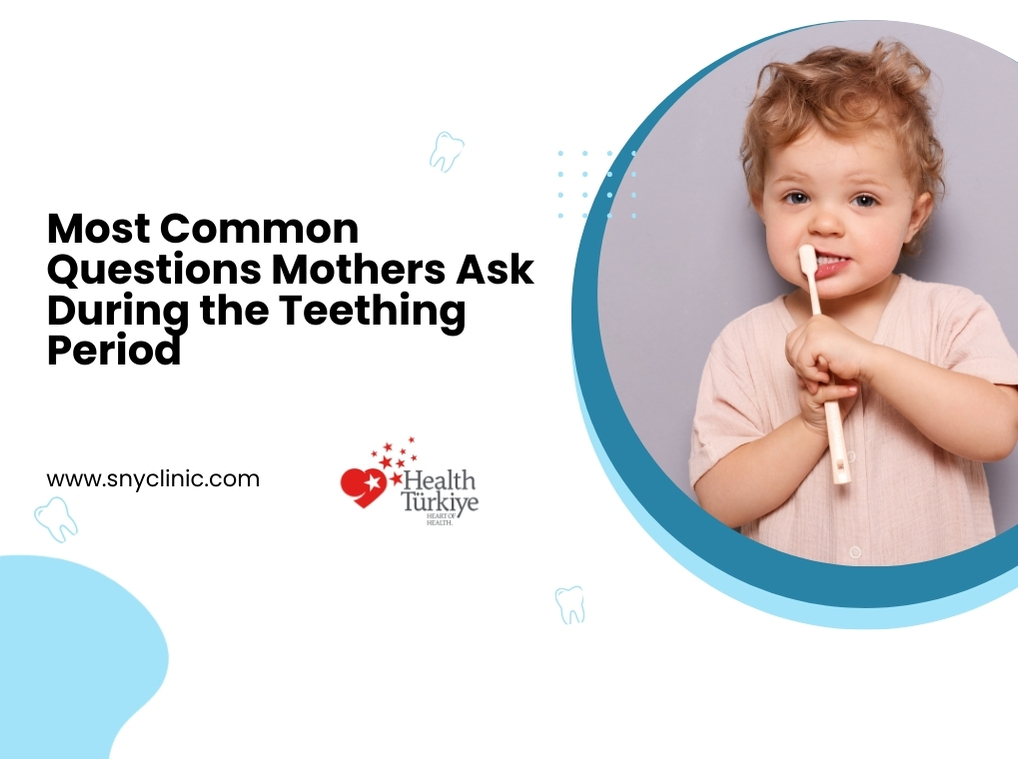
Most Common Questions Mothers Ask During the Teething Period
Most Common Questions Mothers Ask During the Teething Period
The teething period can be quite challenging for both parents and babies. Symptoms such as irritability, fever, and loss of appetite often cause concern for mothers and fathers. Below, you will find detailed and reliable answers to the most frequently asked questions during this process.
1. When Does Teething Start in Babies?
Teething typically begins around the 6th month; however, some babies may start as early as the 3rd month, while others may not begin until the 12th month.
This depends entirely on individual development, and genetic factors also play a role.
The first teeth to erupt are usually the lower central incisors.
2. What Are the Symptoms of Teething?
One of the biggest concerns for mothers is recognizing the symptoms. Common signs of teething include:
- Excessive drooling
- Loss of appetite
- Sleep disturbances
- Constantly putting hands in the mouth
- Redness or swelling of the gums
- Irritability and crying
- Mild fever (below 38°C)
These symptoms are normal.
However, if the fever rises above 38°C, diarrhea becomes severe, or the baby appears unusually weak, a doctor should be consulted.
3. Does Teething Cause Fever?
Teething may cause a slight increase in body temperature, but it does not cause high fever (above 38°C).
A high fever could indicate an infection and should be evaluated by a pediatrician.
4. Can Teething Cause Diarrhea?
Due to increased saliva swallowing, some babies may experience mild diarrhea.
However, severe or prolonged diarrhea is usually not related to teething and may indicate another health issue.
5. How Can I Relieve My Baby’s Discomfort?
To help soothe your baby during teething, you can try:
- Chilled teething toys
- Gently massaging the gums with a clean cloth
- Cold fruit purées (with doctor’s approval)
- Breastfeeding (sucking naturally relaxes babies)
Pain-relief gels or medications should not be used without a doctor’s recommendation.
6. Does Teething Disrupt Sleep?
Yes, many babies wake more frequently during the night in this period.
Pressure and discomfort in the gums may increase irritability.
This is temporary—once the tooth erupts, sleep patterns usually return to normal.
7. Does Teething Change a Baby’s Eating Habits?
Some babies become less interested in feeding, while others may want to breastfeed more often.
Cold yogurt or fruit purées can help soothe discomfort.
For babies on solid foods, very hard foods should be avoided.
8. My Baby’s Gums Are Very Swollen — Is This Normal?
Swelling, bluish bumps, or gum irritation may occur as teeth approach the surface.
This is usually normal.
However, if there is excessive swelling or signs of pus, a pediatric dentist should be consulted.
9. How Long Does Teething Last?
The duration varies for each baby.
A single tooth may take 1–7 days to break through the gums.
All primary teeth are typically completed around 2.5–3 years of age.
10. When Should I Start Caring for My Baby’s Teeth?
Dental care should begin as soon as the first tooth appears.
- 0–1 year: Wipe the teeth with a clean cloth
- 1 year and older: Use baby-safe, swallowable toothpaste
- From age 2: Routine dental check-ups are recommended
Teething can be challenging for mothers, but understanding that the process is normal and temporary can be comforting. Symptoms should be monitored carefully, and a doctor should be consulted if anything unusual occurs. With the right care and patience, both mother and baby can get through this period more comfortably.
This content has been prepared for informational purposes. Results may vary from person to person in every surgical or interventional procedure. It is recommended to consult your physician for detailed information before the procedure.
The images used in this content do not belong to a real patient. The visuals are stock photos obtained from online content provider image platforms.
Publication Date: 10.12.2025
Editor: Uğur Aktaş
Contact Number: +90 545 450 71 41
Contact Email: info@snyclinic.com