


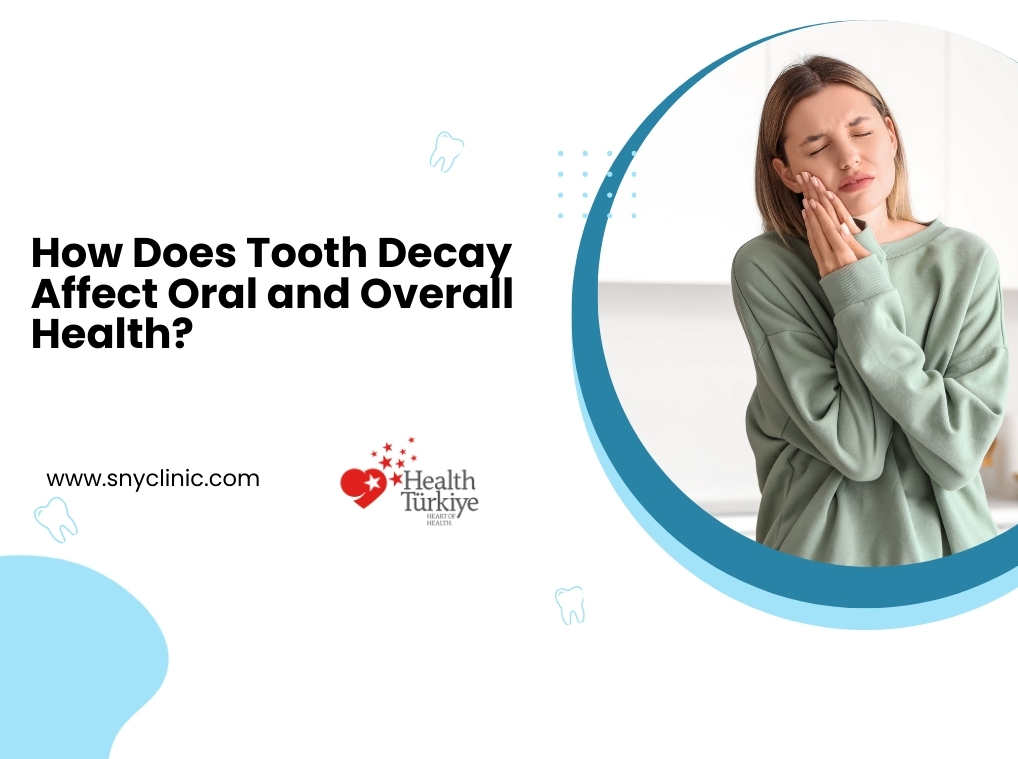
How Does Tooth Decay Affect Oral and Overall Health?
How Does Tooth Decay Affect Oral and Overall Health?
Tooth decay is one of the most common oral health problems worldwide. Many people consider tooth decay to be only a local issue—simply “a hole in the tooth.” However, when left untreated, tooth decay can lead to serious health problems that affect not only the mouth but the entire body. The mouth is the starting point of the digestive system and is directly connected to overall health. For this reason, tooth decay should not be viewed as a minor aesthetic concern but as an integral part of general health.
What Is Tooth Decay and How Does It Develop?
Tooth decay begins when bacteria on the tooth surface convert sugars from food into acids. These acids gradually erode the tooth enamel and progress into the underlying dentin layer. This process usually develops slowly and often goes unnoticed. In the early stages, there may be no pain, but as decay advances, sensitivity, pain, and infection can occur.
Poor oral hygiene, irregular tooth brushing, lack of flossing, excessive consumption of sugary and acidic foods, reduced saliva flow, and genetic factors are among the main contributors to tooth decay.
Effects of Tooth Decay on Oral Health
Tooth decay primarily causes serious problems within the mouth. If left untreated, decay progresses deeper into the tooth and reaches the nerve tissue, leading to severe pain. This pain can significantly reduce quality of life, disrupt sleep, make eating difficult, and cause psychological stress.
Advanced decay can result in dental abscesses. Abscesses form due to the accumulation of infection at the tooth root and are often accompanied by swelling, fever, and bad breath. If not treated, the infection can spread to the jawbone and surrounding tissues. In addition, decayed teeth may eventually fracture or require extraction, leading to tooth loss and impaired chewing function.
Tooth decay is also a major cause of chronic bad breath. Bacteria that accumulate in decayed areas produce foul-smelling gases. Persistent bad breath negatively affects social interactions and can significantly reduce self-confidence.
The Relationship Between Tooth Decay and the Digestive System
The mouth is the first step in the digestive process. Decayed and painful teeth prevent proper chewing of food. Poorly chewed food enters the stomach in larger pieces, placing extra strain on the digestive system. This can lead to stomach pain, indigestion, and bloating.
Furthermore, individuals with tooth decay may avoid hard and fibrous foods and instead choose softer, carbohydrate-rich options. This dietary pattern can worsen oral health and disrupt overall nutritional balance.
Effects of Tooth Decay on Heart and Cardiovascular Health
Recent scientific studies have shown a strong connection between oral health and cardiovascular diseases. Tooth decay and related infections can allow oral bacteria to enter the bloodstream. These bacteria may cause inflammation in blood vessel walls, increasing the risk of heart disease.
Untreated dental abscesses can become chronic sources of infection. Chronic inflammation in the body may raise the risk of heart attack and arterial blockage. Therefore, early treatment of tooth decay is essential not only for oral health but also for protecting heart health.
The Link Between Tooth Decay and Diabetes
There is a bidirectional relationship between tooth decay and diabetes. In individuals with diabetes, high blood sugar levels create an environment that promotes bacterial growth in the mouth, increasing the risk of tooth decay. At the same time, oral infections can make blood sugar levels more difficult to control, negatively affecting diabetes management.
Untreated tooth decay and oral infections can lead to more severe complications in diabetic patients. For this reason, people with diabetes should pay extra attention to their oral health and should not neglect regular dental check-ups.
Impact on the Immune System
When tooth decay becomes a chronic source of infection, the immune system must continuously fight this condition. Over time, this constant immune response can weaken the immune system and make the body more susceptible to other illnesses.
In children and older adults especially, tooth decay can have more pronounced negative effects on general health. Persistent infection may cause fatigue, loss of appetite, and increased frequency of illness.
The Importance of Tooth Decay During Pregnancy
Hormonal changes during pregnancy directly affect oral health. During this period, tooth decay and gum problems may progress more rapidly. Untreated dental infections have been associated with an increased risk of premature birth and low birth weight.
For both maternal and infant health, it is crucial for expectant mothers to have dental check-ups before pregnancy and to maintain regular dental care throughout pregnancy.
Psychological and Social Effects
Tooth decay affects not only physical health but also psychological and social well-being. Pain, bad breath, and aesthetic concerns can reduce self-confidence. Individuals may avoid smiling or feel uncomfortable speaking in social settings.
Decay in the front teeth, in particular, can lead to aesthetic anxiety and negatively impact personal and professional relationships. Over time, this may result in social withdrawal and increased psychological stress.
How Can Tooth Decay Be Prevented?
Preventing tooth decay is possible with regular and proper oral care. Brushing teeth at least twice a day with fluoride toothpaste, using dental floss, and maintaining interdental cleaning are essential steps. Consumption of sugary and acidic foods should be limited, and a balanced, healthy diet should be encouraged.
Regular dental check-ups allow early detection of tooth decay, enabling simple treatments before the condition worsens. Early diagnosis not only shortens treatment time but also reduces costs.
Although tooth decay may appear to be a simple dental issue, it is a serious health problem that affects many systems—from oral health to overall body health. It can contribute to cardiovascular disease, diabetes complications, digestive issues, and weakened immunity. Therefore, preventing and treating tooth decay should never be neglected.
Developing good oral hygiene habits and attending regular dental check-ups are essential components of a healthy lifestyle. A healthy mouth is not only the foundation of a confident smile but also the key to a healthy body.
The images used in this content do not belong to a real patient. The visuals are stock photos obtained from online content provider image platforms.
Publication Date: 09.2.2026
Editor: Uğur Aktaş
Contact Number: +90 545 450 71 41
Contact Email: info@snyclinic.com