


Dental Trauma and the Importance of First Aid
Dental Trauma and the Importance of First Aid
Dental trauma can occur as a result of falls, collisions, traffic accidents, sports injuries, biting hard foods, or direct blows to the mouth area. Following trauma, teeth may crack, break, become displaced, loosen, or be completely knocked out.
Proper first aid after dental trauma is extremely important for preserving the tooth and reducing the risk of future complications. Especially when a permanent tooth is completely knocked out, the steps taken immediately at the scene can directly affect the success of treatment.
What Is Dental Trauma?
Dental trauma is a general term used to describe injuries affecting the teeth, gums, jawbone, and soft tissues around the mouth. Depending on the severity and direction of the impact, the injury may cause only a minor enamel crack or may damage the tooth root, surrounding bone, and the nerve and blood supply inside the tooth.
Dental trauma can occur in both children and adults. In children, common causes include falls during play, bicycle or scooter accidents, and school sports. In adults, sports injuries, traffic accidents, workplace accidents, and biting hard objects are among the most common causes.
The absence of pain after trauma does not necessarily mean that the tooth is undamaged. Some injuries affecting the inner tissues or root of the tooth may not cause noticeable symptoms immediately. For this reason, anyone who receives a blow to the mouth or teeth should be examined by a dentist as soon as possible.
What Are the Most Common Causes of Dental Trauma?
Dental trauma may occur for many different reasons. The most common causes include:
- Falling at home, school, or outdoors
- Bicycle, scooter, and skating accidents
- Contact sports such as football, basketball, and martial arts
- Traffic accidents
- Workplace accidents
- Biting hard foods or objects
- Direct blows to the mouth or jaw
- Children hitting furniture or the floor while playing
- Using teeth to open packages or break hard objects
People who participate in contact sports may reduce the severity of dental and oral injuries by using custom-made mouthguards.
What Are the Types of Dental Trauma?
Dental trauma does not always involve a visible tooth fracture. Different symptoms and treatment needs may occur depending on the type of injury.
Enamel Cracks
Enamel cracks are thin lines that develop on the outermost layer of the tooth. They often do not cause pain, but they may be noticeable for cosmetic reasons. A dental examination is necessary to determine whether deeper tissues have been affected.
Tooth Fractures
Following trauma, a small corner or a larger section of the tooth may break. The fracture may remain limited to the enamel or extend into the dentin or pulp, which contains the tooth’s nerves and blood vessels.
A yellowish layer may indicate exposed dentin, while a red or pink area may suggest that the pulp has been exposed. In such cases, sensitivity, pain, and the risk of infection may increase.
Root Fractures
The visible part of the tooth may appear intact even though the root is fractured. Tooth mobility, pain while biting, or bleeding around the gum line may occur. Root fractures are usually diagnosed through clinical examination and dental X-rays.
Tooth Displacement
After trauma, a tooth may move sideways, forward, backward, or deeper into the gum. The tooth may appear longer or shorter than usual, and the patient’s bite may feel different.
A displaced tooth should not be repositioned by the patient. Repositioning and stabilisation should be performed by a dentist.
Loose Teeth
A tooth may become loose after an impact. This may occur when the supporting ligaments or surrounding bone are damaged.
Even if the tooth is mobile, it should be left in place. It should not be repeatedly touched or tested with the fingers, and hard foods should not be chewed on the affected side.
A Completely Knocked-Out Tooth
The complete displacement of a tooth from its socket is known as avulsion. In permanent teeth, this is a serious dental emergency requiring immediate attention.
The possibility of saving a knocked-out permanent tooth depends on how the tooth is handled, how it is stored, and how quickly the patient reaches a dentist.
What Should Be Done First After Dental Trauma?
When dental trauma occurs, it is important to remain calm and assess the injured person’s general condition. If there is loss of consciousness, dizziness, nausea, vomiting, severe headache, difficulty breathing, or uncontrolled bleeding, emergency medical care should be the first priority.
If the person’s general condition is stable, the mouth should be examined carefully. Bleeding may be controlled by applying gentle pressure with clean gauze. If there is swelling around the lips or cheeks, a cold compress wrapped in a cloth may be applied externally.
If the tooth is broken, displaced, loose, or completely knocked out, a dentist should be contacted immediately.
What Should Be Done If a Broken Tooth Fragment Is Found?
If the broken piece of the tooth can be found, it should be kept in a clean container. If it is dirty, it may be gently rinsed without scrubbing. The fragment may be transported in milk or saline solution.
In some cases, the broken tooth fragment can be reattached by a dentist using special dental materials. For this reason, even a small fragment should not be thrown away.
If the broken edge is sharp, the area should not be touched repeatedly, as it may injure the tongue or cheek. Aspirin, alcohol, cologne, or similar substances should never be applied directly to the broken tooth.
First Aid for a Knocked-Out Permanent Tooth
If a permanent tooth is completely knocked out, the following steps should be taken immediately:
- Find the tooth and hold it only by the white crown, which is the visible part of the tooth.
- Do not touch, rub, scrub, or brush the root.
- If the tooth is dirty, rinse it gently for a short time.
- If the person is conscious and it is safe to do so, the tooth may be carefully repositioned in its socket.
- If the tooth cannot be repositioned, keep it in milk.
- Do not wrap the tooth in a dry tissue or allow it to dry out.
- Visit a dentist or emergency dental clinic as soon as possible.
Successful replantation is not always possible. However, correct handling, proper storage, and rapid dental treatment can increase the chance of saving the tooth.
What Should Be Done If a Baby Tooth Is Knocked Out?
It is extremely important to determine whether the affected tooth is a baby tooth or a permanent tooth. A knocked-out baby tooth should never be placed back into its socket.
Replanting a baby tooth may damage the developing permanent tooth underneath. Bleeding should be controlled using clean gauze, and the child should be taken to a dentist as soon as possible.
The main goals in baby tooth injuries are to reduce pain, prevent infection, and protect the developing permanent tooth.
What Should Be Done If a Tooth Has Moved Out of Position?
If a tooth has shifted sideways, been pushed into the gum, or appears to have moved outward, the patient should not attempt to correct its position by hand. Improper handling may cause further damage to the root, surrounding bone, and supporting tissues.
Pressure should not be applied to the tooth, and the patient should avoid eating on the affected side. A dentist should be consulted immediately. If necessary, the dentist may reposition the tooth and temporarily stabilise it by attaching it to neighbouring teeth.
What Should Not Be Done After Dental Trauma?
Incorrect actions may reduce the chance of saving the tooth. The following should be avoided:
- Holding a knocked-out tooth by the root
- Brushing, scraping, or scrubbing the root
- Cleaning the tooth with bleach, alcohol, or disinfectant
- Transporting a permanent tooth in a dry tissue
- Replanting a knocked-out baby tooth
- Forcing a loose or displaced tooth back into position
- Placing aspirin directly on the painful area
- Delaying examination because the injury appears minor
- Throwing away the broken tooth fragment
- Waiting only for the pain to disappear
A reduction in pain does not necessarily mean that the tooth has healed. Damage to the nerve and blood supply may lead to tooth discolouration, infection, or problems around the root weeks or months later.
Why Is a Dental Examination Important After Trauma?
A dentist does not evaluate only the visible fracture. Tooth mobility, pulp health, surrounding tissues, and bite alignment are also examined. When necessary, dental X-rays may be taken to check for root fractures, bone damage, or developmental concerns.
Treatment may involve reattaching the broken fragment, applying a tooth-coloured filling, stabilising the tooth, performing root canal treatment, treating the gums, or carrying out surgical procedures.
Follow-up appointments are also important because some complications may not appear immediately. They may develop weeks or months after the trauma.
A dentist should be contacted again if any of the following symptoms occur:
- Tooth discolouration
- Swelling
- Abscess formation
- Pain
- Hot or cold sensitivity
- Increasing tooth mobility
- Gum changes around the injured tooth
How Should You Eat After Dental Trauma?
After dental trauma, soft foods may be recommended for a period of time to avoid placing additional pressure on the injured tooth. Hard, crunchy, very hot, or very cold foods should be avoided.
Unless advised otherwise by the dentist, suitable foods may include:
- Yoghurt
- Soup
- Mashed foods
- Soft pasta
- Eggs
- Mashed vegetables
- Soft cheese
- Foods cut into small pieces
The injured area should not be used for biting or chewing. Oral hygiene should not be neglected, but the affected area must be cleaned gently. Mouthwashes and medications should only be used according to the dentist’s recommendations.
How Can Dental Trauma Be Prevented in Children?
Dental trauma is common in children, but certain precautions may help reduce the risk of injury.
- Choose age-appropriate play areas.
- Make sure children wear helmets while riding bicycles or scooters.
- Use mouthguards during contact sports.
- Make slippery floors and sharp furniture corners safer.
- Prevent children from placing hard toys in their mouths.
- Teach children not to use their teeth to open packages or break objects.
- Consult a dentist if a child’s front teeth are positioned significantly forward.
Parents, teachers, and sports coaches should be familiar with basic dental first aid, especially for knocked-out permanent teeth.
Why Is First Aid Important in Dental Trauma?
The time between the injury and professional dental treatment can be critical, particularly when a permanent tooth has been completely knocked out. Protecting the cells on the root surface, storing the tooth in a suitable liquid, and avoiding delays in treatment may directly affect the outcome.
Proper first aid may help:
- Increase the chance of keeping the permanent tooth
- Protect the tooth root and surrounding tissues
- Reduce the risk of infection and further tissue damage
- Reduce the need for more complex treatment
- Prevent functional and cosmetic tooth loss
- Protect developing permanent teeth in children
- Manage pain and anxiety more effectively
Dental trauma should therefore not be considered only a cosmetic problem. Every broken, loose, displaced, or knocked-out tooth requires professional evaluation.
When Is Emergency Care Necessary After Dental Trauma?
Urgent dental or medical attention should be sought in the following situations:
- A permanent tooth has been completely knocked out
- A tooth is visibly displaced
- A tooth is severely loose
- A large part of the tooth has fractured
- Red or pink tissue is visible inside the broken tooth
- Bleeding does not stop
- Jaw movement is restricted
- The teeth no longer meet normally
- There is visible facial deformity
- Severe pain or rapidly increasing swelling develops
- Loss of consciousness, vomiting, dizziness, or neurological symptoms occur
If a head or neck injury is suspected, emergency medical assessment should take priority.
Dental trauma may occur unexpectedly in everyday life. However, the correct first aid response can make a significant difference to the future of the injured tooth.
Important first aid steps include keeping the broken tooth fragment, avoiding contact with the root of a knocked-out permanent tooth, preventing the tooth from drying out, never replanting a baby tooth, and seeking dental care as quickly as possible.
Even if the injury appears minor or causes no immediate pain, a professional examination should not be delayed. Early diagnosis, appropriate treatment, and regular follow-up can help preserve the health, function, and natural appearance of the tooth.
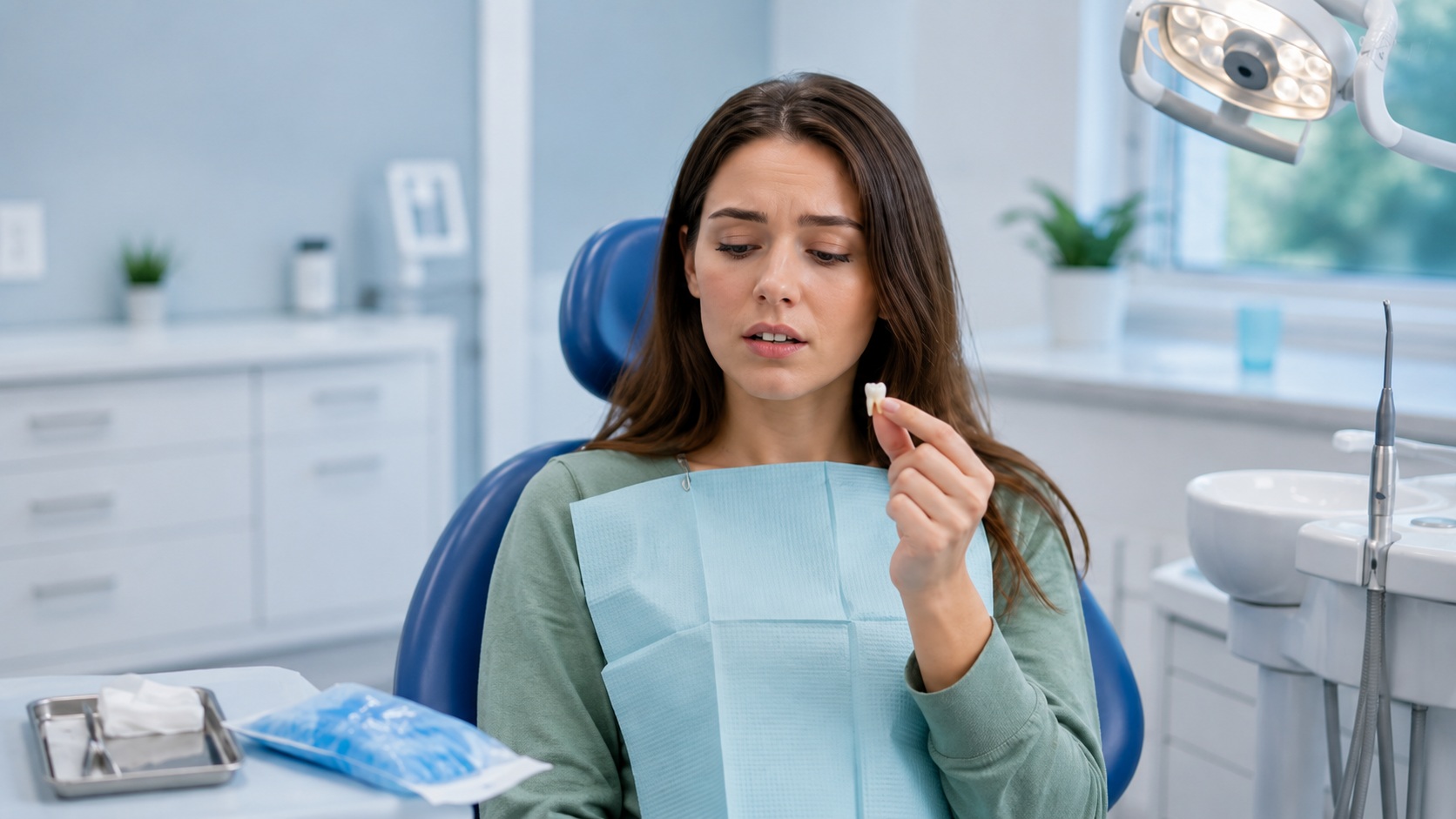
The images used in this content do not belong to a real patient. The visuals are stock photos obtained from online content provider image platforms.
Publication Date: 16.07.2026
Editor: Uğur Aktaş
Contact Number: +90 545 450 71 41
Contact Email: info@snyclinic.com